Fire Safety in Insulation: Everything You Need to Know
In 2026, fire safety is a critical design consideration which directly impacts occupant safety, asset protection, business continuity, and standard regulatory compliance. As buildings become more complex and requirements increase, insulation materials play a crucial in fire protection.
Choosing the right insulation can significantly influence how a building reacts during a fire event. Understanding fire testing standards and how different insulation materials perform under these standards helps stakeholders such as architects, consultants, contractors, and building owners make more informed decisions.
Fire Testing Standards Commonly Used in India
India does not rely on a single fire testing methodology. Depending on the project specifications, building codes, consultant preferences, and international references, various global fire standards are used.
The most commonly referenced standards are:
- British Standards (BS)
- American Standards (ASTM)
- European Standards (EN / Euroclass)
Each standard evaluates fire performance differently, focusing on parameters such as combustibility, flame spread, smoke generation, heat release, and fire resistance.
BS 476 Standard: What Is It?
BS 476 is a long-established British fire testing standard used to assess the fire performance of building materials and construction elements.
Several parts of BS 476 are particularly relevant to insulation materials:
- BS 476 Part 4: Non-combustibility test for materials
- BS 476 Part 6: Fire propagation test
- BS 476 Part 7: Surface spread of flame test
- BS 476 Parts 20-24: Fire resistance testing of construction elements
BS 476 evaluates how materials contribute to fire growth and how flames spread across their surfaces. Although many regions have transitioned to European Euroclass standards, BS 476 remains widely referenced across India and several international projects.
ASTM E84 Standard: What Is It?
ASTM E84, commonly known as the Steiner Tunnel Test, is one of the most widely recognized American fire testing methods.
The test measures:
- Flame Spread Index (FSI): Indicates how rapidly flames travel on the surface of a material.
- Smoke Developed Index (SDI): Measures the amount of smoke generated during testing.
ASTM E84 is primarily used for materials applied to walls, ceilings, HVAC, and interior finishes. The lower the FSI and SDI values, the better the fire performance of the material. ASTM E84 is intended as a comparative test for surface burning characteristics.
EN 13501 Standard: What Is It?
EN 13501-1, also known as the Euroclass Fire Classification System, is the European framework for evaluating the reaction of construction products to fire.
Materials are classified into the following categories:
| Euro Class | Fire Performance |
|---|---|
| A1 | Non-combustible |
| A2 | Limited combustibility |
| B | Very limited contribution to fire |
| C | Limited contribution to fire |
| D | Acceptable contribution to fire |
| E | Reactive to small flame exposure |
| F | No determined fire performance |
The standard also includes:
- Smoke classification:
- s1: Low smoke generation
- s2: Moderate smoke generation
- s3: High smoke generation
- Burning droplet classification:
- d0: No flaming droplets
- d1: Limited flaming droplets
- d2: Significant flaming droplets
Euroclass provides a comprehensive assessment by considering combustibility, smoke production, and flaming droplets in a single classification system.
How Do Glass Wool and Stone Wool Perform in These Standards?
Glass Wool
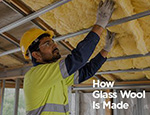
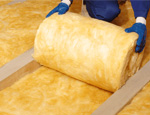
Glass wool is manufactured using recycled glass and sand, which are converted into inorganic fibers. Due to its mineral composition, glass wool demonstrates excellent fire performance.
Typical characteristics include:
- Non-combustible
- Low flame spread
- Negligible smoke generation
- No flaming droplets
- High resistance to fire propagation
- Suitable for HVAC, commercial buildings, industrial facilities, and high-rise projects
In many applications, glass wool products can achieve Euroclass A1 or A2 classifications, depending on the product construction and facing materials.
Stone Wool
Stone wool (rock wool) is produced from volcanic rock and minerals melted at very high temperatures.
Key fire safety properties include:
- Non-combustible
- Excellent fire resistance
- Very high melting temperature
- Minimal smoke generation
- No flaming droplets
- Widely used in fire-rated assemblies, industrial plants, data centres, and passive fire protection systems
Stone wool is commonly classified as Euroclass A1, representing the highest level of fire performance.
Why Mineral Wool Insulations Are Preferred
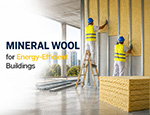
Both glass wool and stone wool belong to the mineral wool family and are often preferred in fire-sensitive applications because they:
- Do not significantly contribute to fire growth
- Produce very low levels of smoke
- Do not generate flaming droplets
- Maintain integrity at elevated temperatures
- Support compliance with stringent fire regulations
Comparative Table: Fire Performance of Common Insulation Materials
| Parameter | Glass Wool | Stone Wool | EPS | XPS | XLPE | NBR | Bubble Wrap | Polyester Wool |
|---|---|---|---|---|---|---|---|---|
| Non-Combustibility | Excellent | Excellent | Poor | Poor | Poor | Poor | Poor | Moderate |
| Smoke Generation | Very Low | Very Low | High | High | Moderate to High | High | High | Moderate |
| Droplet Formation | None | None | Yes | Yes | Yes | Yes | Yes | Possible |
| ASTM E84 Flame Spread Index (Typical) | Very Low | Very Low | Moderate to High | Moderate to High | Moderate | Moderate | High | Moderate |
| Toxicity During Fire | Very Low | Very Low | High | High | Moderate to High | High | High | Moderate |
| Melting Point / Service Temperature Resistance | ~600°C+ | ~1000°C+ | ~100°C | ~75°C | ~100°C | ~120°C | Low | ~250°C |
| Overall Fire Safety Performance | Excellent | Excellent | Poor | Poor | Moderate | Moderate | Poor | Moderate |
Note: Performance may vary depending on density, facings, additives, product formulation, and manufacturer specifications. Project-specific test reports should always be reviewed before final material selection.
Fire Safety Should Be a Core Selection Criterion
While thermal conductivity and energy efficiency are often the primary factors considered when selecting insulation, fire safety deserves equal attention.
Materials that contribute minimally to fire growth, generate little smoke, and do not produce flaming droplets can significantly improve evacuation safety and reduce property damage. Mineral wool insulations such as glass wool and stone wool consistently demonstrate superior fire performance across British, American, and European testing methodologies, making them a reliable choice for commercial, industrial, institutional, and residential applications.
As fire regulations become increasingly stringent and building safety remains under greater scrutiny, selecting insulation with proven fire performance is an investment in long-term safety, compliance, and peace of mind.
If you are looking to learn more or have a query about insulation solutions, feel free to reach out to us at sgindia.insulation@saint-gobain.com”.
Latest Blogs