Choosing the Right Insulation for Industrial Applications

Selecting the right insulation is critical for ensuring safety, energy efficiency, process reliability, and long-term operational performance. In industrial applications, insulation is not merely a protective layer. It is a strategic investment that influences operating costs, equipment life, sustainability goals, and workplace safety.
This article focuses on selecting the appropriate mineral wool insulation for external industrial applications, while considering factors such as operating temperature, equipment type, density, thickness, and performance objectives.
Bonded mineral wool insulation is governed by IS 8183 for installations within India. This standard covers applications with temperatures upto 800 deg C. It includes product quality parameters for bonded mineral wool insulation including mattresses, blankets, rolls and boards. For preformed pipe sections, the applicable standard is IS 9842. Both standards provide guidelines on various parameters such as density tolerance, dimensional tolerance, shot content, non-combustibility, linear shrinkage, resistance to jolting and vibration, moisture absorption, moisture content, chloride content and sulphur content to name a few.
Why Is Insulation Needed?
Before selecting an insulation system, it is important to understand the primary objective behind its installation. Different applications may have different requirements, and identifying the main purpose helps ensure the right design.
1. Personnel Protection
Industrial equipment often operates at elevated temperatures, creating a risk of burns and heat-related injuries through accidental contact.
Proper insulation helps maintain external surface temperatures within safe limits. In many industries, the commonly accepted maximum surface temperature is 60°C, although some designers adopt more stringent limits of 55°C or lower to provide an additional safety margin.
2. Energy Savings
Most industrial processes consume significant amounts of energy through fuels such as:
- Coal
- Natural gas
- Biomass
- Waste heat recovery systems
- Hybrid energy sources
Well-designed insulation reduces heat loss, allowing equipment to operate more efficiently while reducing fuel consumption, operating costs, and carbon emissions. It is one of the most effective yet often overlooked contributors to energy conservation.
3. Reducing Temperature Drop
In systems that transport steam or hot fluids over long distances, insulation helps minimize temperature loss.
For example, steam distribution pipelines rely on insulation to ensure that steam reaches the end user at the desired temperature and pressure. Reduced temperature loss translates directly into optimized fuel use and improved process efficiency.
4. Process Stability
Industries such as chemical processing, pharmaceuticals, and food manufacturing often require precise temperature control.
By minimizing unwanted heat loss, insulation helps maintain stable operating conditions, reducing:
- Process variations
- Production downtime
- Product quality issues
- Batch spoilage
5. Corrosion Control
Flue gases passing through pollution-control equipment such as:
- Electrostatic Precipitators (ESP)
- Flue Gas Desulphurization (FGD) systems
must remain above their condensation temperature.
Premature condensation can result in acidic deposits on internal surfaces, accelerating corrosion and reducing equipment life. Proper insulation prevents excessive cooling of flue gases, ensuring that they remain in the gaseous phase until treatment is completed.
6. Acoustic Insulation
Industrial environments frequently contain equipment that generates noise levels above safe exposure limits.
While a typical occupational noise exposure limit is 85 dB, many industrial processes exceed this threshold. Insulation systems can help:
- Absorb sound
- Reduce sound transmission
- Improve workplace comfort
- Enhance regulatory compliance
A. Operating Temperature: The First Selection Criteria
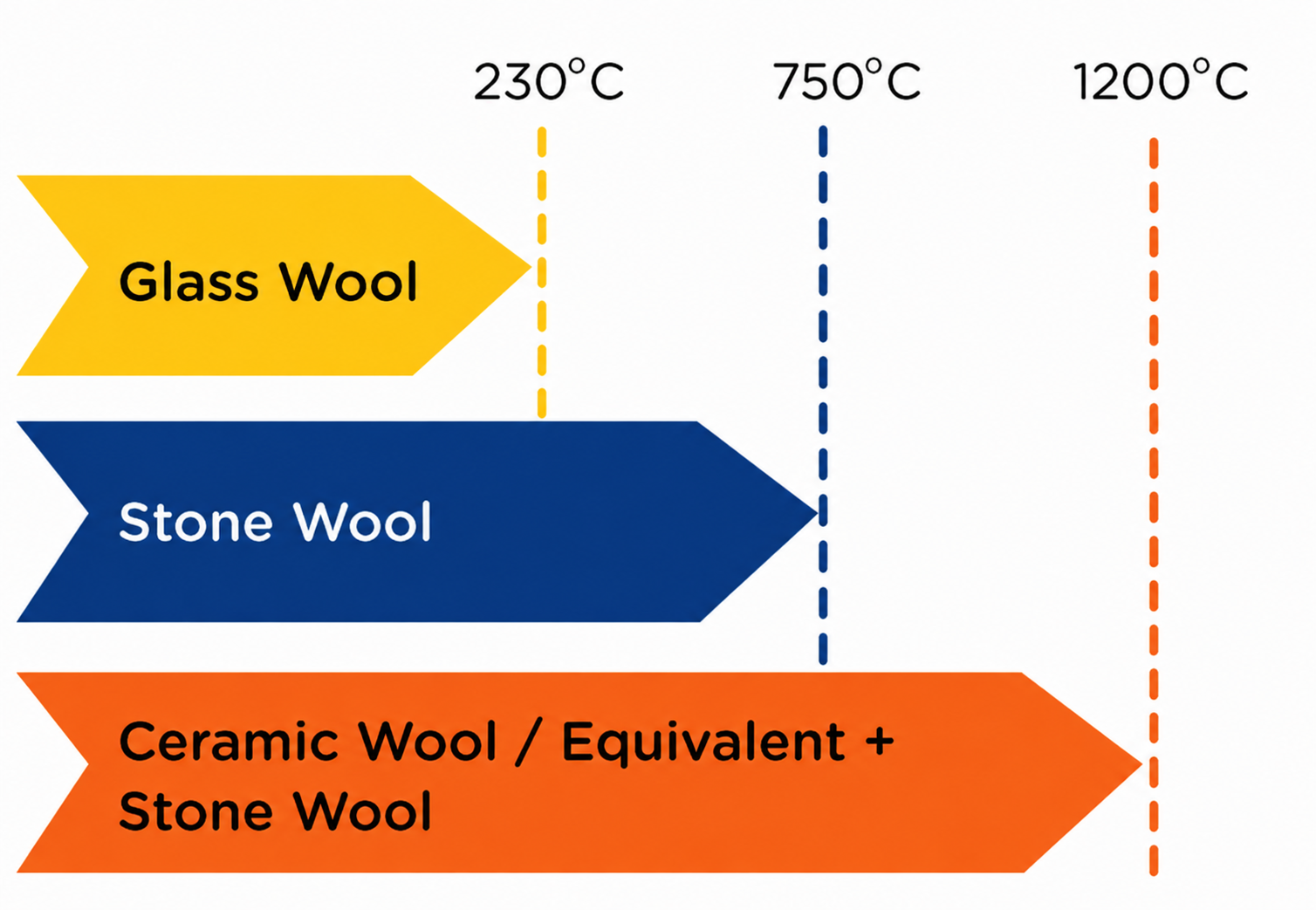
Mineral wool insulation comprises a family of fibrous insulation materials, each suitable for different temperature ranges.
Glass Wool
Recommended for applications up to 230°C
Glass wool offers excellent thermal performance at moderate temperatures and is widely used for building, HVAC and medium-temperature industrial applications.
Stone (Rock) Wool
Recommended for applications up to 750°C
Stone wool offers superior thermal resistance and dimensional stability at high temperatures, making it suitable for most industrial equipment and piping systems.
Composite Insulation Systems
Recommended for applications above 750°C
For very high-temperature applications, a multilayer system is typically used:
- First layer: Ceramic insulation (or equivalent high-temperature insulation)
- Outer layer: Stone wool insulation
This approach combines high-temperature protection with excellent thermal efficiency.
B. Selecting Insulation Based on Equipment Type
The geometry of the equipment greatly influences insulation selection.
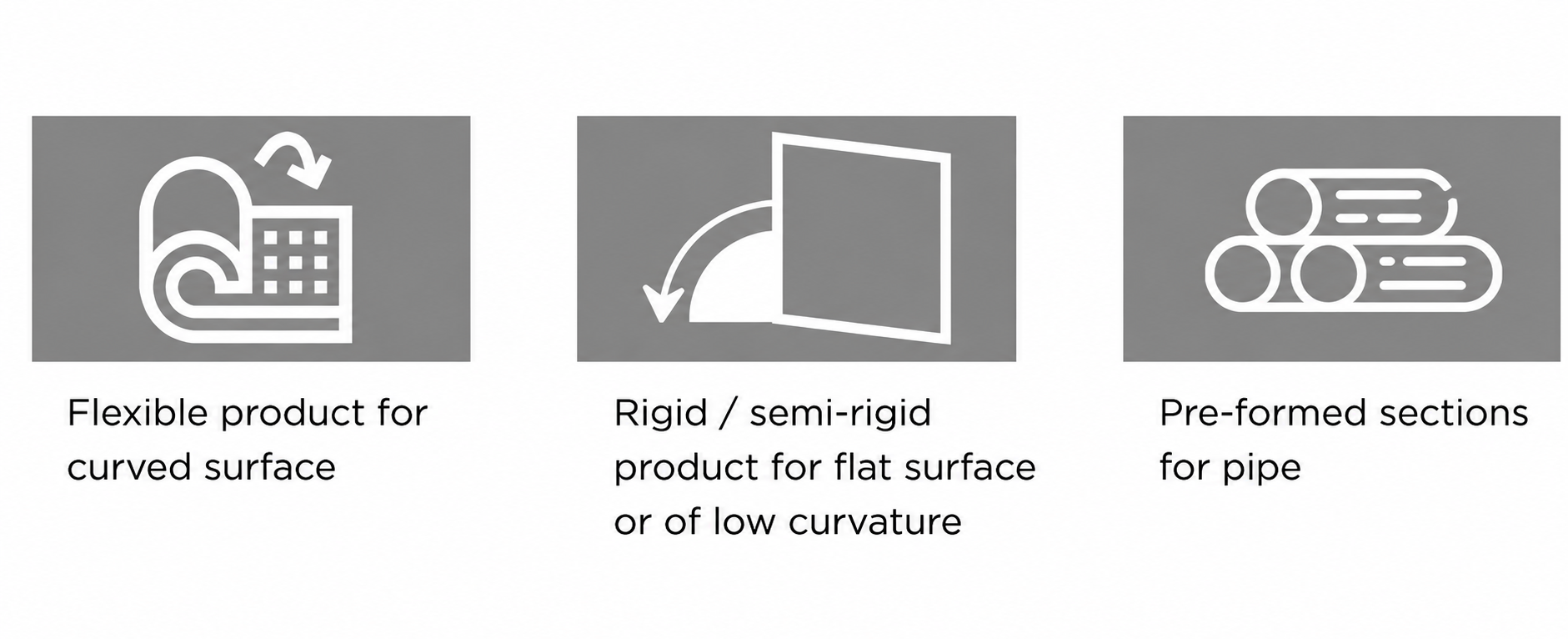
1. Curved Surfaces
Recommended Product: LRB Mattress
Flexible mineral wool mattresses conform easily to curved surfaces such as:
- Vessels
- Ducts
- Stacks
- Large reactors
2. Flat Surfaces
Recommended Product: RB Slabs
Rigid rock wool slabs are suitable for:
- Tank walls
- Tank roofs
- Flat equipment surfaces
Due to their superior mechanical strength, they are especially useful in areas where maintenance personnel may walk over the insulated surface.
3. Pipelines
Recommended Product: Preformed Pipe Sections
Preformed pipe sections offer several advantages:
- Faster installation
- Reduced material wastage
- Lower labor requirements
- Improved durability
- Consistent insulation thickness
Highly reputed consultants mandate the use of pipe section for pipes with diameters upto 6 inches and recommend them for diameters upto 14 inches.
4. In Fill Spaces
Loose wool insulation is commonly used for:
- In-fill cavities
- Hard-to-access areas
- Irregular geometries
C. Selecting the Right Density
The optimum balance between thermal performance, durability, and weight can be achieved through proper density selection.
For high-temperature stone wool applications, the following guideline may be used:
| Operating Temperature (°C) | Recommended Density (kg/m³) |
|---|---|
| Up to 250 | 70 |
| Up to 400 | 100 |
| Up to 550 | 120 |
| Up to 750 | 144 |
These values serve as general recommendations and should be verified against specific project requirements.
D. Determining Insulation Thickness
Selecting insulation thickness is often more complex than selecting the insulation material itself. Several variables influence the final thickness requirement:
1. Type of Fluid
Thermal behavior varies significantly depending on whether the medium is:
- Steam
- Hot water
- Thermic fluid
- Process gas
- Other specialized fluids
2. Operating Temperature
Higher operating temperatures generally require greater insulation thickness to achieve desired heat-loss limits.
3. Equipment Location
Outdoor installations experience additional heat loss due to:
- Wind
- Rain exposure
- Environmental conditions
Higher wind speeds significantly increase convective heat transfer and must be accounted for during thermal design.
4. Thermal Bridges and F-Factor
Mechanical supports, metal spacers, fasteners, and insulation joints can create thermal bridges.
These localized heat-loss paths are considered through correction factors such as the F-factor, and can significantly influence actual thermal performance. Standards such as ISO 23993 provide guidance for incorporating these effects.
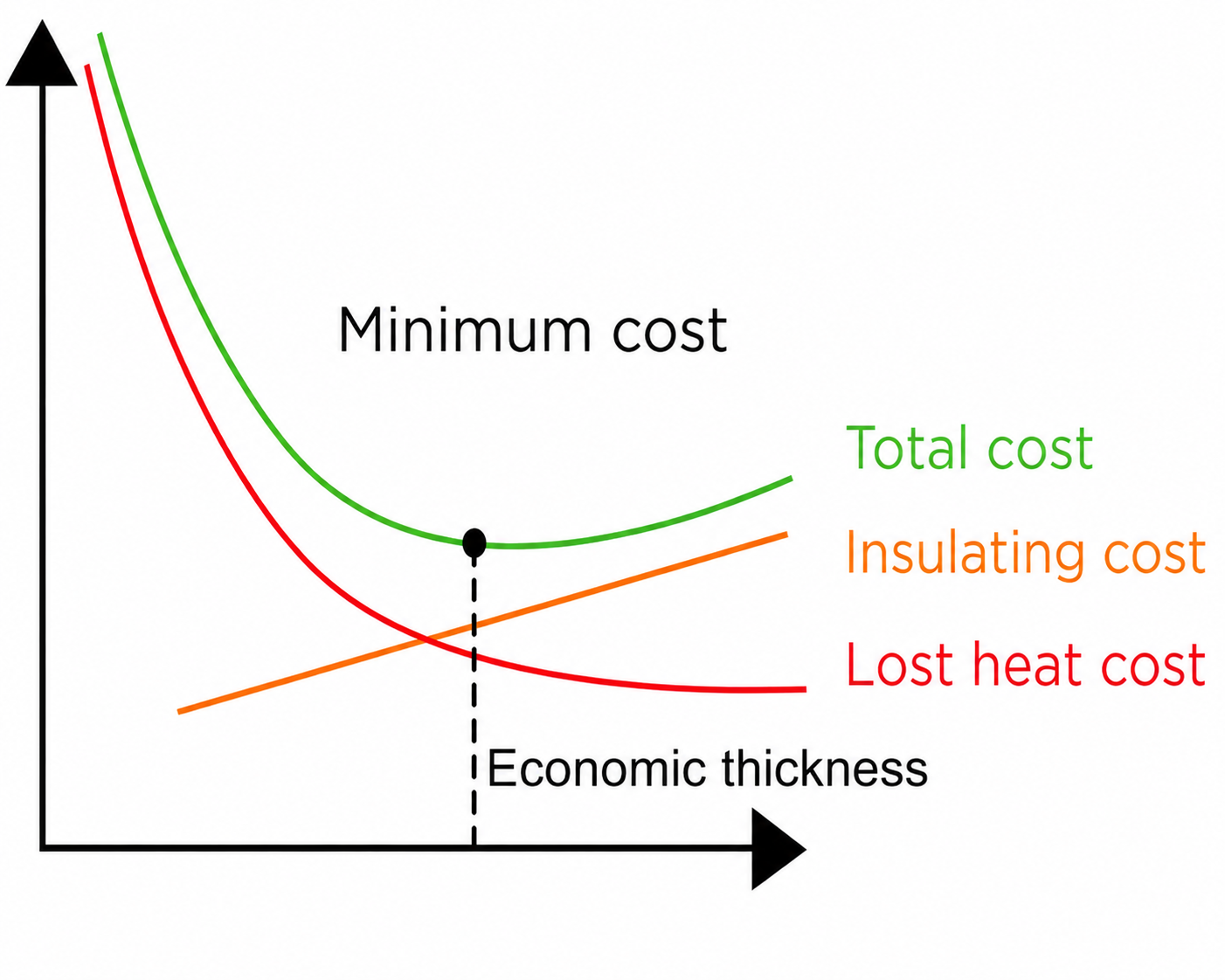
5. Economic Insulation Thickness
The lowest total cost of ownership (TCO) is achieved not by minimizing insulation thickness, but by optimizing it.
Economic thickness balances:
- Initial insulation investment
- Installation cost
- Long-term energy savings
The methodology outlined in EN 17956 can be used for determining the economic optimum.
6. Thermal Calculation Standards
Insulation thickness calculations are commonly performed using standards such as:
- ISO 12241
- VDI 2055
- ASTM C680
Example: Selecting Insulation for a Steam Pipe
Consider the following application:
- Pipe size: 6 inches
- Operating temperature: 300°C
- Ambient temperature: 15°C
- Wind speed: 6 m/s
- Installation: Outdoor
- Objective: Energy savings
Step 1: Select the Insulation Material
Since the operating temperature is 300°C, stone wool insulation is the appropriate choice.
Step 2: Select the Product Form
As the equipment is a pipeline, a preformed pipe section is recommended.
Step 3: Select Density
Based on the density guideline, an operating temperature of 300°C requires 100 kg/m³ stone wool insulation.
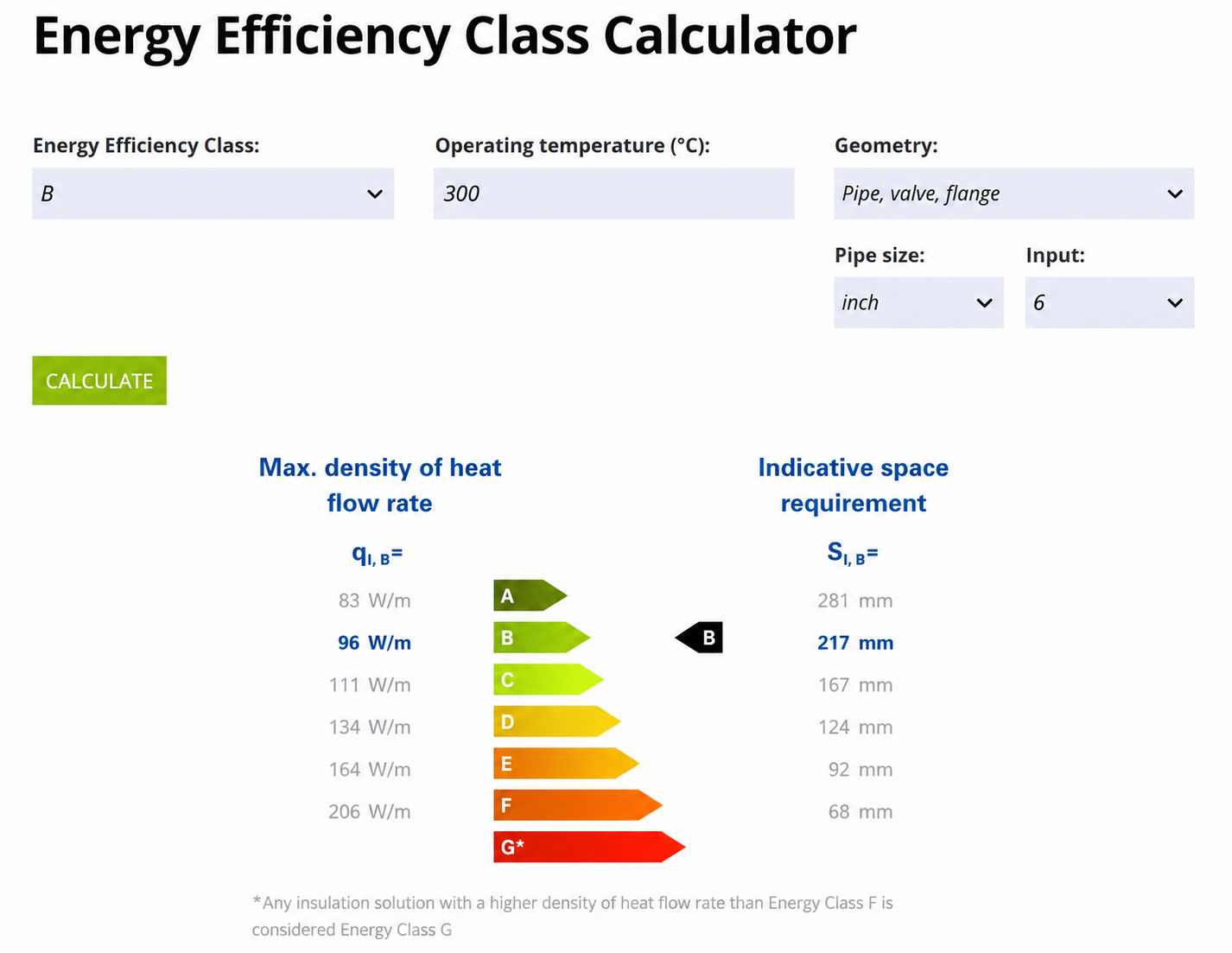
Step 4: Establish Heat-Loss Target
Using the EN 17956 energy-efficiency approach, the recommended heat-loss limit is approximately 96 W/m.
Step 5: Determine Thickness
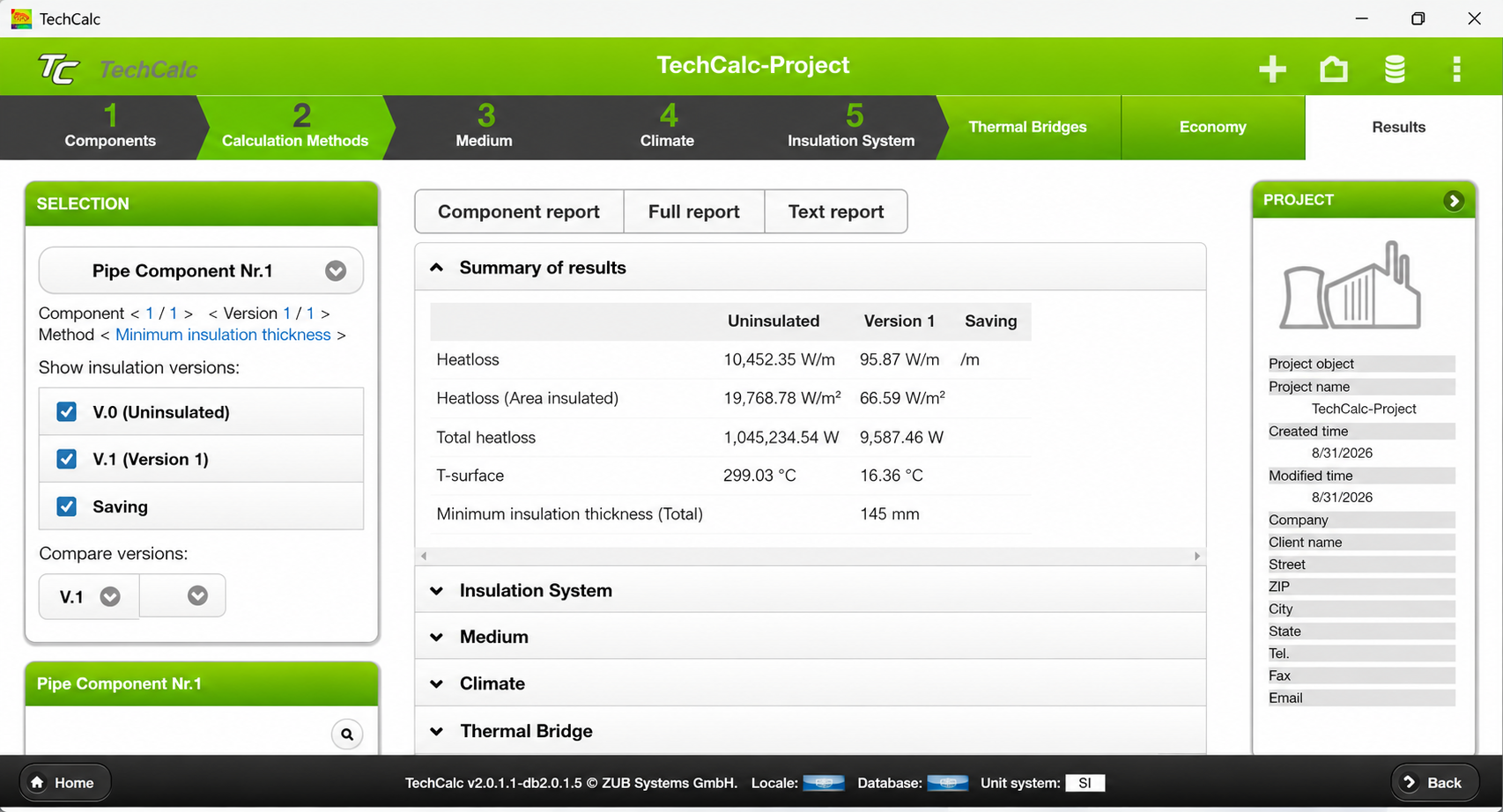
Using the ISO 12241 methodology for thermal calculations, the required insulation thickness is found to be:
145 mm
Since the thickness exceeds 75 mm, a two-layer insulation system is recommended to improve performance and installation quality.
Step 6: Account for Thermal Bridges
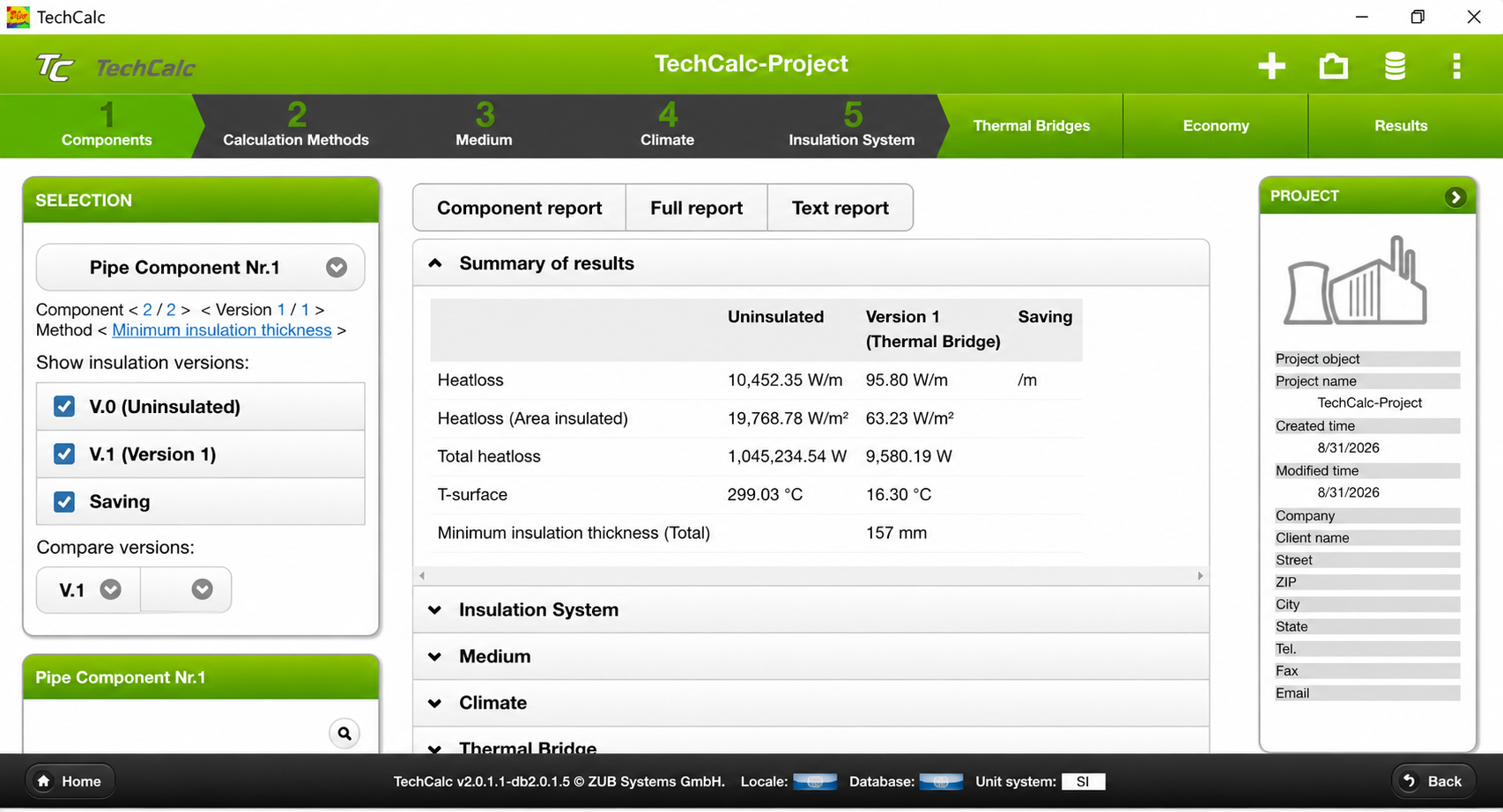
Assuming an overall correction factor (F-factor) of 1.05, the revised insulation thickness becomes:
160 mm
In this example, a joint factor of 1.05 is used because the system contains two insulation layers. For three-layer systems, the joint factor and corresponding F-factor may approach 1.0 due to reduced heat leakage through joints.

Conclusion:
Choosing the correct industrial insulation requires more than simply selecting a material based on temperature. Safety requirements, equipment geometry, operating conditions, energy-efficiency goals, thermal bridges, and economic considerations must all be evaluated together.
While thumb rules and generic recommendations provide a useful starting point, actual project performance depends on detailed engineering calculations. Incorporating recognized standards such as IS 14164, ISO 12241, ISO 23993, ASTM C680, VDI 2055, and EN 17956 helps ensure reliable designs and realistic energy-saving outcomes.
By considering these factors during the design stage, industries can maximize safety, minimize energy losses, improve process stability, and achieve long-term operational efficiency through a well-engineered insulation system.
If you are looking to learn more or have a query about insulation solutions, feel free to reach out to us at sgindia.insulation@saint-gobain.com”.
Latest Blogs