Corrosion Under Insulation (CUI) : Meaning, Causes and Risk Reduction
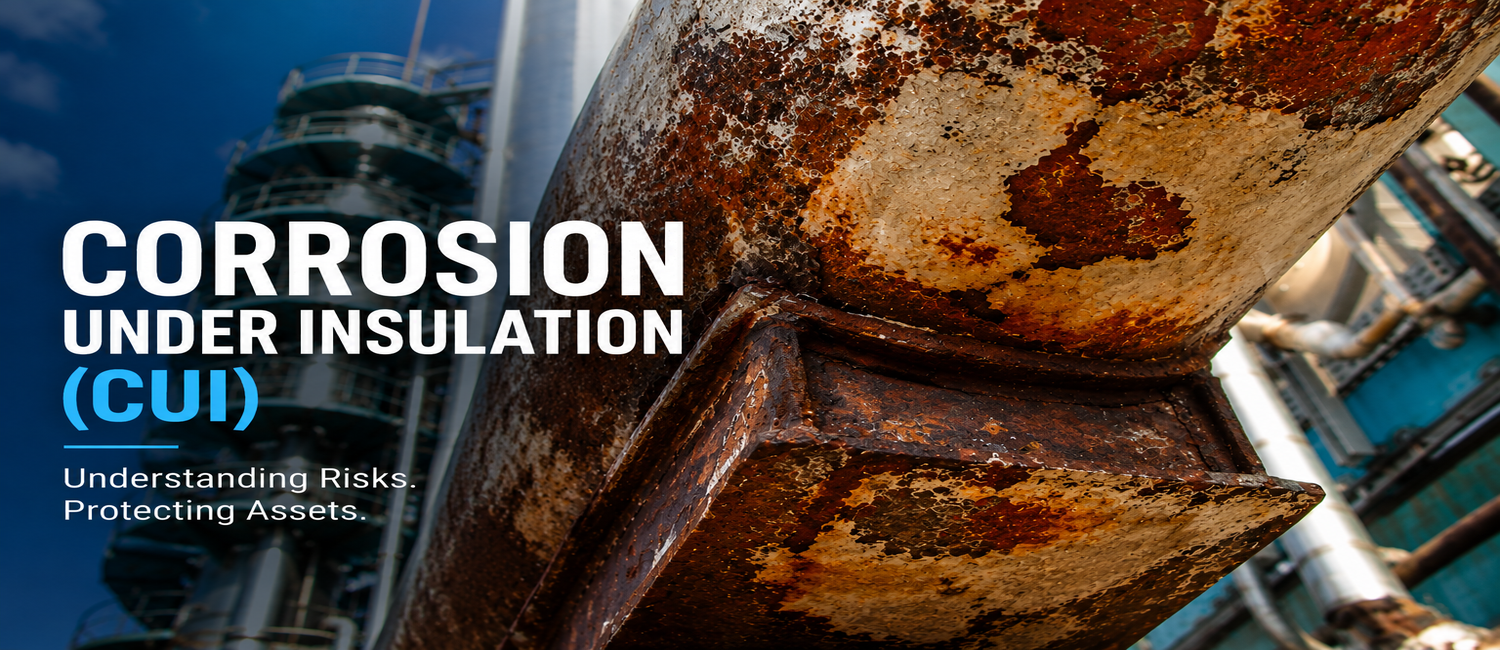
Corrosion Under Insulation (CUI) is the corrosion of the external surface of a metal equipment which is covered with insulation. It is an electrochemical and chemical process caused by the presence of 3 major elements under desirable temperatures : oxygen, water (or moisture) and metal. Most equipments are metallic and most metals are susceptible to corrosion. Insulation itself does not cause it, but conceals the damage underneath, making early detection difficult. This hidden deterioration can eventually lead to hazardous leakage situations, unexpected failures, and safety risks.
Why is CUI serious?
It can result in :
- Structural damage and loss of integrity
- High repair or replacement costs
- Unplanned plant shutdowns
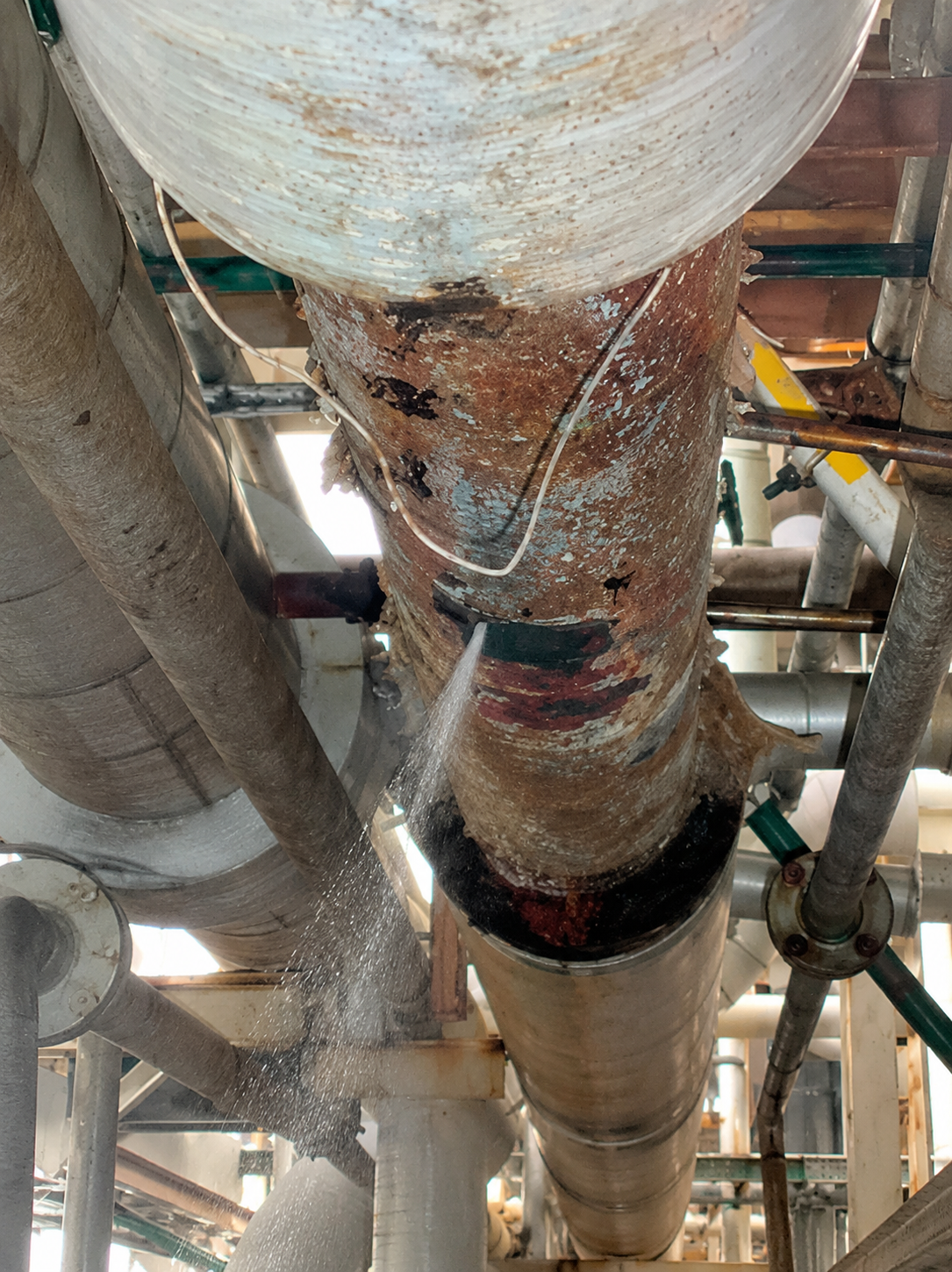
- Safety and environmental hazards due to undetected leaks
Factors which accelerate corrosion under insulation
CUI is rarely caused by a single factor
Insulation itself does not initiate corrosion, but it can create or sustain the conditions (moisture + contaminants + temperature) that allow corrosion to develop.
It results from combined failure of:
- Coating degradation
- Water ingress
- Poor installation or sealing
The rate of CUI increases significantly under certain conditions :
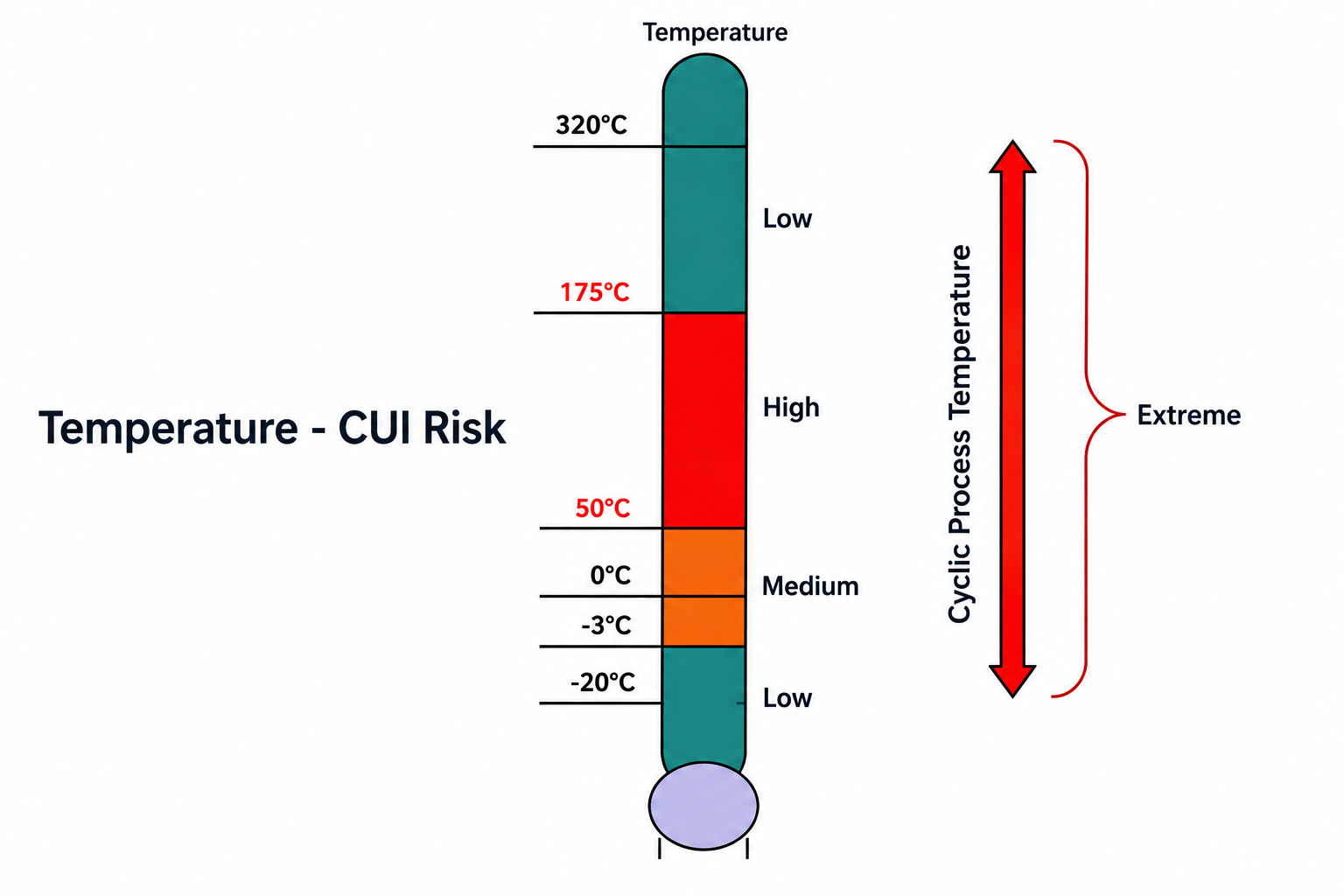
- Certain temperature ranges of equipments
- Cyclic temperature process (temperatures frequently going above and below 100 deg C or with regular start-stop process). Cyclic temperature conditions leading to repeated wet-dry cycles
- Water or moisture ingress which remains trapped in insulation
- Exposure of insulation system to severe weather such as heavy rainfall
- Climate with high moisture / humidity
- Environment with saline mist, high relative humidity, exposure to cleaning agents etc.
- Contaminants such as chlorides and sulphur
Critical Temperature Range for CUI
The risk of CUI is highest between -20 to 175 deg C. Lack of adequate steps can cause severe CUI damage within a year. “CUI risk is typically highest in the range of approximately 50°C to 175°C, although it can occur between -20°C and 320°C depending on conditions.
CUI risk by material type
Different metals exhibit varying levels of susceptibility to corrosion:
Aluminium : It is relatively corrosion-resistant due to the rapid formation of a thin protective oxide layer. This layer acts as a barrier to prevent further contact of oxygen with the aluminium surface.
Carbon steel and low alloy steels: They are more prone to corrosion as the rust formation does not act as a protective barrier. The corrosion then progresses through the metal thickness.
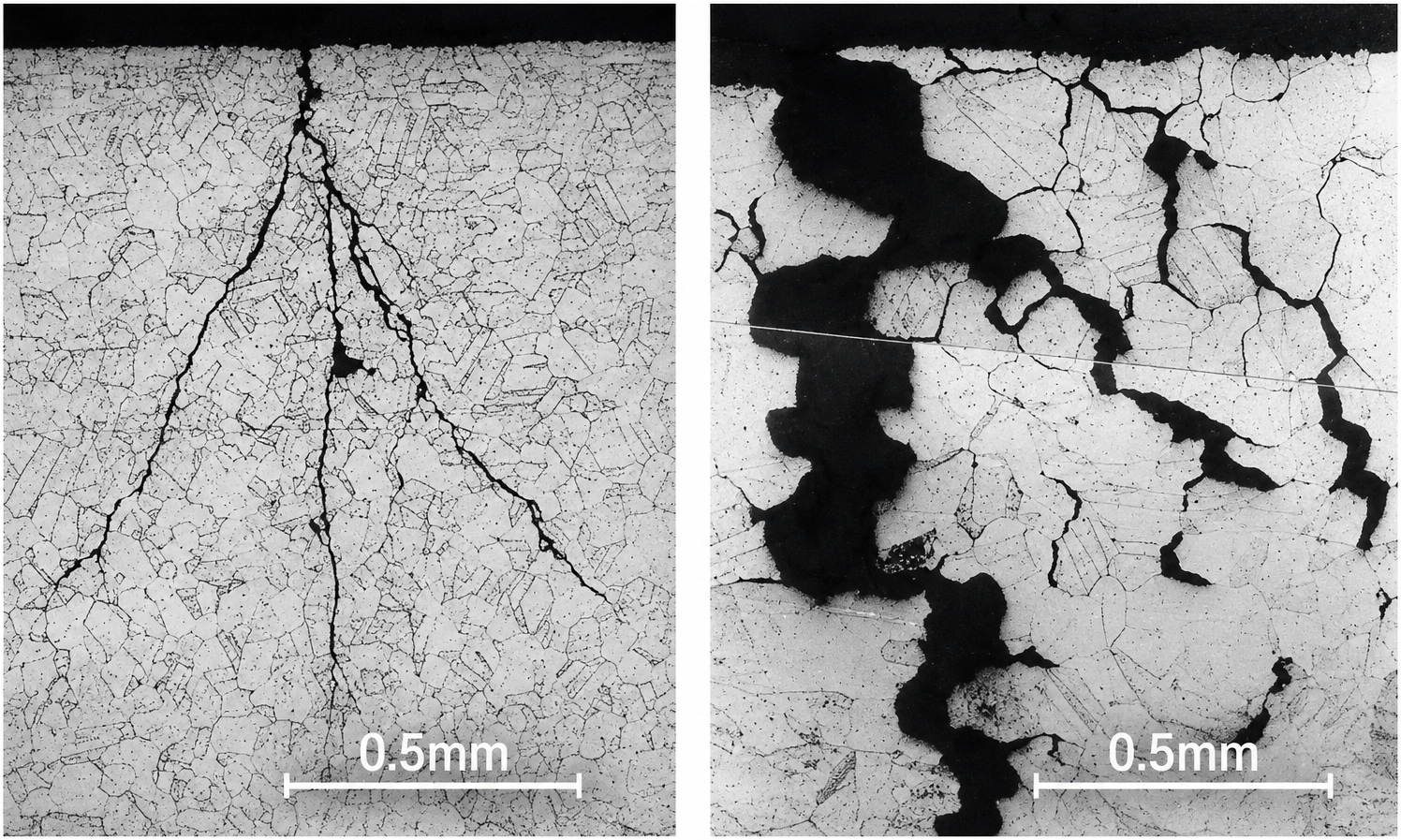
Stainless steel / austenitic steel : It is susceptible to ‘External Stress Corrosion Cracking (ESCC)’. ESCC generally occurs when :
- The protective layer of the alloy is broken due to mechanical or thermal stress
- Presence of contaminants such as chloride
This gap / crack in the layer causes the corrosion to propagate deep inside the metal, leading to structural weakness. Cracking occurs due to combined chemical + stress effects, not only a physical gap.
Reducing risk of CUI : A system based approach
While corrosion cannot be fully eliminated but can be effectively controlled, its occurrence and rate can be significantly reduced through a holistic, system-based corrosion control strategy, implemented as a continuous process.
1. Metal protection :
- Protective coatings : Since the exposure of a metal surface is a key factor for corrosion, protective coatings will act as critical barrier and prevent it from coming in contact with water and oxygen . Common examples are Thermal Sprayed Aluminium (TSA) or zinc.
- Coating Verification : Before the application of insulation :
- Quality of protective coating must be checked
- Any damage must be corrected
- The coating must not be damaged during the application of insulation
2. Insulation + Cladding Installation :
- Sealing discs / water deflectors can be incorporated as a part of the cladding system
- Insulation + cladding system must be designed and installed to prevent water ingress
- Trapped moisture or water can accelerate the corrosion and hence, suitable drainage plugs or holes must be provided
3. Inspection and Maintenance :
- Inspection of cladding for damage or openings which act as points of water ingress
- Correction (repair) and resealing of damaged systems / barriers
- Partial insulation removal to check for underlying corrosion in high-risk areas
- Early detection systems to check for water accumulation or corrosion
Standards and guidelines for minimizing CUI risk
Several standards provide specification parameters and procedural guidelines for installation and maintenance to prevent CUI.
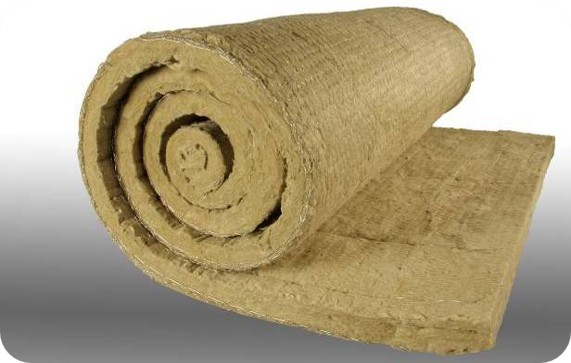
IS 8183 : Bonded Mineral Wool – Specifications
This Indian standard covers product quality parameters for bonded mineral wool insulation including mattresses, blankets, rolls and boards. It covers applications with temperature till 800 deg C and includes parameters directly linked to CUI such as moisture absorption, moisture content, chloride content and sulphur content.
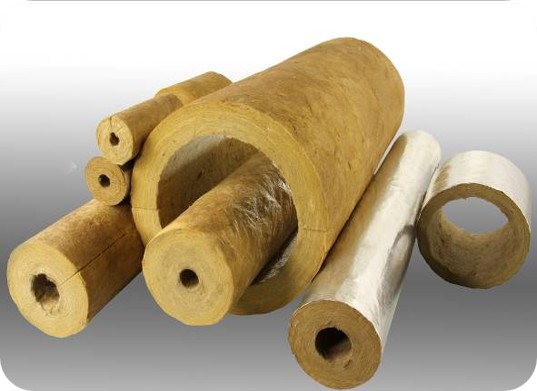
IS 9842 : Preformed Fibrous Pipe Insulation – Specification
This is also an Indian standard, nearly similar to IS 8183 and covers quality parameters for preformed fibrous pipe sections insulation. It covers temperatures upto 750 deg C and addresses CUI-linked characteristics such as moisture content, moisture absorption, chloride content and sulphur content.
ASTM C592: Standard specification for mineral fiber blanket insulation and blanket-type pipe insulation (metal-mesh covered) (industrial type)
This is a globally recognized standard for mineral fiber blanket insulation used in industrial insulation and is applicable for temperatures between -18 deg C to +649 deg C. It covers all relevant parameters for industry application and some specific aspects linked to CUI such as water vapor sorption, corrosiveness and stress corrosion performance.
ASTM C547: Standard specification for mineral fiber pipe insulation
This is globally recognized standard which covers preformed pipe sections (insulation made to form hollow cylinders). It is applicable for temperatures up to 760 deg C and includes all relevant parameters for industry applications including some linked to CUI water vapor sorption and stress corrosion performance (when insulation applied to austenitic stainless steel pipe).
ASTM C612: Standard Specification for Mineral Fiber Block and Board Thermal Insulation
This is globally recognized standard which covers mineral fiber semi-rigid and rigid board insulation. It is applicable for temperatures between -18 to +982 deg C and includes all relevant parameters for industry applications including some linked to CUI such as water vapor sorption and stress corrosion performance on austenitic stainless steel.
ASTM C795: Standard Specification for Thermal Insulation for Use in Contact with Austenitic Stainless Steel
ASTM C795 defines the requirements for insulation materials used on austenitic stainless steel equipment, where the main risk is chloride-induced external stress corrosion cracking (ESCC).
It sets chemical limits and requires insulation to pass both:
- Corrosion testing as per ASTM C692
- Chemical analysis as per ASTM C871
In practice, this standard ensures that insulation does not become a source of corrosive contaminants, even when exposed to moisture or high temperatures.
It is widely used in oil & gas, LNG and process industries as the reference specification for safe insulation design on stainless steel systems.
ASTM C871: Standard Test Methods for Chemical Analysis of Thermal Insulation Materials for Leachable Chloride, Fluoride, Silicate, and Sodium Ions
ASTM C871 defines laboratory test methods to measure water-soluble ions present in insulation materials, including:
- Chlorides
- Fluorides
- Sodium and silicates
These ions are critical because, in real conditions, moisture can extract and transport them through the insulation, concentrating them at the metal surface where corrosion occurs. The standard also highlights that some ions (sodium, silicates) can partially inhibit corrosion, depending on their balance with chlorides.
In practice, this test is essential to ensure insulation is chemically stable and compatible with metal surfaces over time, especially in wet or cyclic conditions.
ASTM C692 : Standard Test Method for Evaluating the Influence of Thermal Insulations on External Stress Corrosion Cracking (ESCC) Tendency of Austenitic Stainless Steel
Some alloys of austenitic steel tend to crack at stress points when exposed to corrosive environments, especially chloride ions. This standard allows a user to determine whether the soluble chlorides in the insulation will contribute to ESCC of the equipment.
ASTM C692 evaluates the ability of insulation materials to induce External Stress Corrosion Cracking (ESCC) on stainless steel.
- The test reproduces real operating conditions (temperature, moisture, contaminants) to determine whether the insulation system may cause cracking under stress.
- It is a key performance test used alongside C795 to validate insulation suitability
CINI (Committee Industrial Insulation Standards) Guidelines :
These include a detailed set of guidelines for the selection and installation of insulation on industrial equipments working at hot and cold temperatures. With a clear description of the CUI risks and mitigation procedures, these guidelines address insulation quality and CUI mitigation strategies such as painting protection for stainless and carbon steel pipelines.
FESI (European Federation of Associations of Insulation Contractors) Guidelines :
This document gives the code of practice for carrying out thermal insulation work for applications in the temperature range of -80 to +850 deg C. These guidelines focus on the whole insulation system including insulation materials, supports, claddings, coverings and fixings and how it is installed. By including methods of protection against water ingress and guidelines for corrosion protection, it addresses mitigation of CUI. It emphasizes the need for regular inspection and maintenance as a factor that influences insulation systems’ effective lifetime.
Conclusion
CUI cannot be fully eliminated but can be effectively controlled through a comprehensive, system-based approach combining coating protection, insulation performance, proper installation, and continuous inspection. When correctly implemented, this approach significantly reduces risk, improves asset integrity, and minimizes lifecycle costs.
If you are looking to learn more or have a query about insulation solutions, feel free to reach out to us at sgindia.insulation@saint-gobain.com.
Latest Blogs