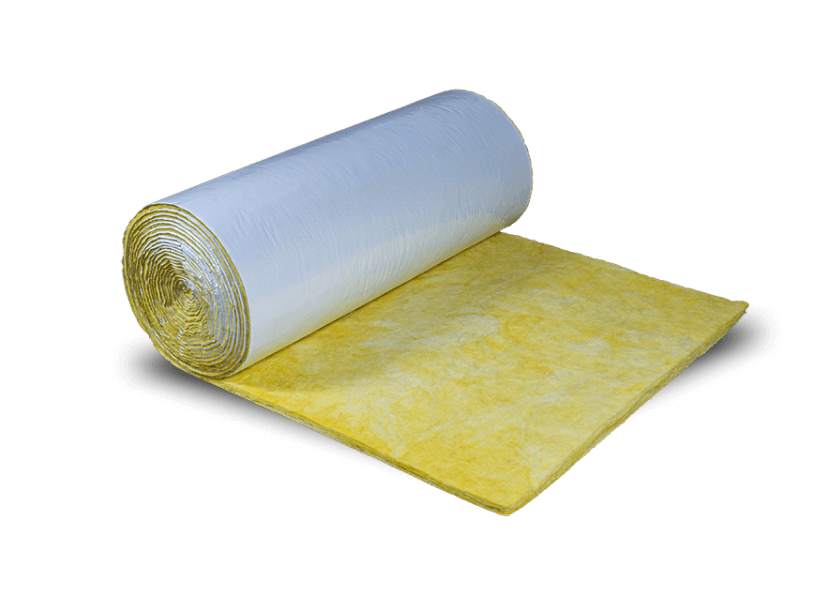

- Glass Wool
Glass Wool Roll
-
 Long resilient blankets
-
 Yellow in
colour -
 Lightweight and
flexible
Lightweight and
flexible
-
 Customized
products -
 Fewer joints and
less wastage
Fewer joints and
less wastage
Range
- Density : 10 to 48 kg/m3
- Thickness : 25 to 130 mm
- Width : 1.1 to 1.2 m
- Length : 7.5 to 30 m
- Available with or without facing
Facings
- Aluminium : FSK, R3035HD, Aluglass
- Polypropylene : White Metalized Polypropylene
- Tissue : FGT, BGT
Basic Information
| Make / Brand | Twigainsul |
| Material | Resin bonded glass wool |
| Standard / Code | IS 8183 |
Product Performing Criteria
| Parameter | Values | Standards |
|---|---|---|
| Thermal Conductivity (W/m.K) | 0.030 to 0.041 at 25oC mean temperature | IS 8183, IS 3346 |
| Thermal Resistance at Specific Thickness (m2 K/W) |
For 25 mm: 0.6 to 0.8 m2 K/W For 50 mm: 1.2 to 1.6 m2 K/W Calculated as per thickness and thermal conductivity of insulation |
|
| NRC | 0.65 to 0.95 | ASTM C-423 / ISO 354 |
General Material Properties
| Parameter | Values | Standards |
|---|---|---|
| Non-combustibility | Non-combustible / Incombustible, Reaction to Fire 'A1' | BS 476 Part 4, IS 8183 EN 13501 |
| Surface spread of flame | NIL, Class 1 | BS 476 part 7 |
| Fire propagation | Class 0, index l <12, sub-index i1 <6 | BS 476 part 6 and 7 |
| Moisture content | Less than 2% | IS 3144, IS 8183 |
| Shot content | NIL | IS 3144, IS 8183 |
| Sulphur / Chloride | Negligible | IS 3144, IS 8183 |
| Mold growth | None | IS 3144, IS 8183 |
| Alkalinity | pH 7 to 10 | IS 8183 |
Certifications and Approvals
| Environment | Fire | Health Safety | Standards Compliance |
|---|---|---|---|

|
|

|

|

|
|||

|


Frequently Asked Questions
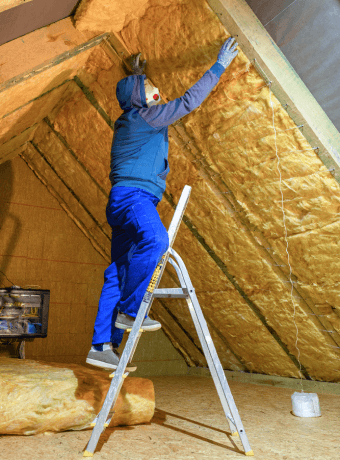
Glass wool roll insulation is used for thermal and acoustic insulation in roofs, ceilings, walls, HVAC ducts, and industrial systems such as cryogenic tanks
It reduces heat movement (heat loss and heat gain), helping maintain stable temperatures and lower energy consumption.
Commercial construction, HVAC, manufacturing, infrastructure, transportation, and OEM sectors widely use it.
Yes, glass wool roll insulation is non-combustible and meets key fire safety standards such as BS 476 part 4, 5, 6 &7.
High-quality glass wool rolls offer low thermal conductivity, ensuring effective thermal resistance (R-value). This (R-value) depends on the installed thickness and thermal conductivity of the product.
Its micro-air pockets within the fibrous structure virtually resist the airflow thus absorbs sound, reducing noise transmission and improving indoor acoustics.
Glass wool rolls are available in multiple densities (12- 48 Kg/m3) and thicknesses (25-130 mm) to suit different performance needs.
Selection depends on thermal targets, acoustic requirements, fire ratings, and application type.
Glass wool rolls are lighter and easier to install, while rock wool typically offers higher density and impact resistance.
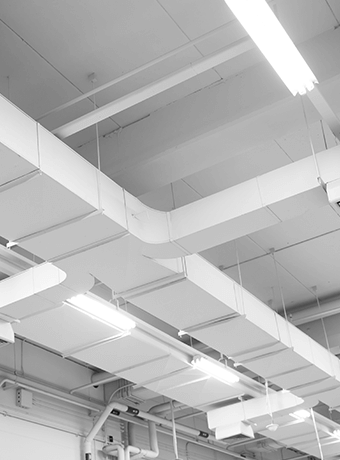
Yes, it is widely used for HVAC duct insulation and acoustic wrapping.
Glass wool roll is suitable for moderate-temperature applications; higher-temperature systems may require specialized insulation.